Tim Miller's BGC AGM Speech Signals Steady Hand on UK Gambling Regulation Amid Leadership Shift and Innovation Push
Tim Miller's BGC AGM Speech Signals Steady Hand on UK Gambling Regulation Amid Leadership Shift and Innovation Push

The Setting and Key Moments from the BGC Annual General Meeting
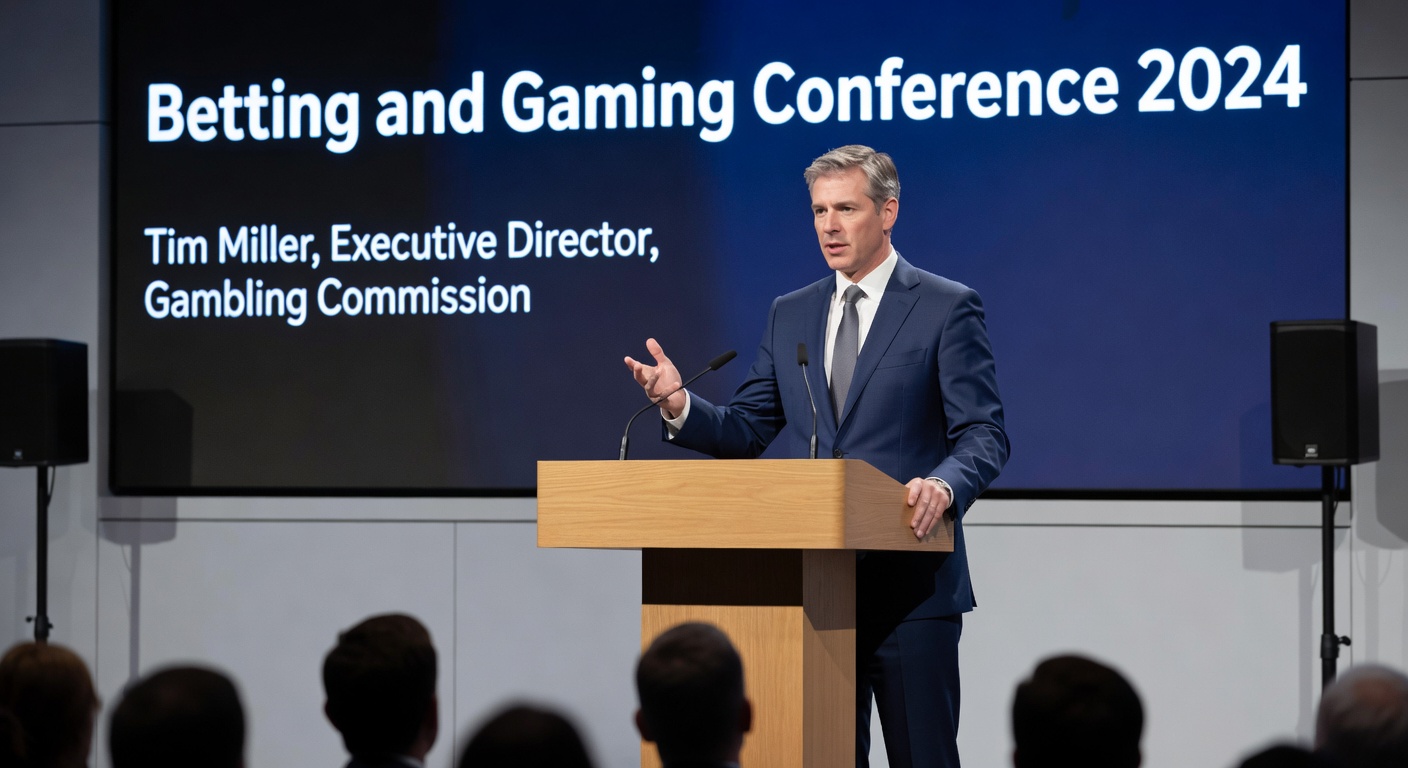
Tim Miller, executive director of the UK Gambling Commission, took the stage at the Betting and Gaming Council (BGC) Annual General Meeting on 26 February 2026, laying out a roadmap for the industry's near future; attendees heard details on leadership changes, fresh funding streams aimed at illegal operators, proposed fee adjustments, and a clear nod to licensed market innovations that align with regulatory goals.
What's interesting here is how Miller framed the updates not just as mandates, but as collaborative steps forward, especially as the calendar flips into March 2026 with operators digesting these announcements amid ongoing compliance checks and market shifts.
The speech arrived at a pivotal moment, with the licensed gambling sector navigating tighter oversight while fending off unlicensed threats; Miller's words underscored a balanced approach, supporting growth in regulated spaces without compromising consumer protections.
Leadership Transition: Andrew Rhodes Steps Down
Central to Miller's address stood the announcement of Chief Executive Andrew Rhodes' departure on 30 April 2026, marking the end of an era that saw significant regulatory reforms take shape under his watch; observers note this timing allows for a seamless handover, given the Commission's ongoing projects like market surveillance enhancements and affordability checks rolling out in phases.
Rhodes' exit prompts questions about interim leadership, yet Miller emphasized continuity, pointing to the team's deep bench of expertise that has driven recent successes in operator licensing and enforcement actions.
And while specifics on a successor remain under wraps as of early March 2026, the Commission's structure ensures priorities like illegal market disruption stay front and center, with Miller himself steering executive operations in the interim.
£26 Million Funding Injection Targets Illegal Gambling
Turning to enforcement muscle, Miller revealed a new £26 million funding allocation spread over three years, specifically earmarked to dismantle the illegal gambling market that siphons revenue from licensed operators and exposes players to unchecked risks; this boost enables expanded investigations, tech upgrades for tracking offshore sites, and cross-agency partnerships that have already yielded tangible results in prior quarters.
But here's the thing: this isn't piecemeal spending; data from recent Commission reports shows illegal operators accounting for a notable slice of player activity, often luring users with unregulated bonuses or lax age verification, so the funds target root causes like payment blocking and international cooperation.
Experts who've tracked these efforts point out how similar initiatives in past years led to hundreds of site shutdowns, and with this infusion, teams expect accelerated progress, especially as March 2026 brings fresh intelligence-sharing protocols into play.
Licence Fee Consultation: From 0.21% to 0.28% of GGY
Miller also flagged an upcoming consultation on hiking licence fees from the current 0.21% to 0.28% of Gross Gambling Yield (GGY), a move designed to sustain the Commission's expanded remit without leaning on general taxation; figures indicate this adjustment reflects rising operational demands, from AI-driven monitoring tools to bolstered consumer dispute resolution.
Stakeholders in the room heard that the consultation, set to launch soon after the speech, invites industry input on the mechanics, ensuring the formula captures scale while protecting smaller operators through tiered structures already in place.
That's where the rubber meets the road for BGC members: higher fees fund the very tools that level the playing field against black-market rivals, and early March 2026 feedback loops suggest broad support tempered by calls for transparent modeling.
Backing Innovation: Sports Books and Licensed Evolution
Shifting gears to brighter prospects, Miller spotlighted support for innovations within the licensed sector, citing physical sports books inside casinos as prime examples that enhance player experiences without spiking risk profiles; take Paddy’s Sports Book at the Hippodrome in London, where punters enjoy immersive betting amid casino floors, all under stringent licensing that mandates responsible gambling safeguards.
These setups, he noted, dovetail perfectly with objectives like diversification and venue revitalization, allowing operators to blend retail betting with slots and tables while leveraging existing compliance frameworks; researchers who've studied such hybrids report steady GGY contributions alongside low incident rates, proving the model's viability.
Now, as March 2026 unfolds with trial expansions in other venues, the Commission views these as blueprints for future growth, provided they integrate affordability assessments and self-exclusion linkages seamlessly.
It's noteworthy that Miller drew a line here: innovations must stay within bounds, steering clear of high-risk features that could trigger reviews, yet those like sports books get a green light for their controlled, on-property nature.
Taskforces and Industry-Government Collaboration
Collaboration emerged as a recurring theme, with Miller highlighting joint taskforces involving industry, government, and enforcement bodies to dismantle illegal networks; these groups pool data on rogue operators, refine payment interception strategies, and align on player education campaigns that have curbed unauthorized play by double-digit percentages in monitored segments.
People who've participated in these efforts often discover how shared intelligence uncovers laundering schemes tied to offshore platforms, leading to coordinated takedowns that protect licensed revenues.
So, while the £26 million fuels the machinery, it's the partnerships that sharpen the blade; as of March 2026, taskforce outputs include updated blacklists and proactive alerts to financial institutions, amplifying impact across borders.
Broader Implications for Operators and Players
Operators listening in grasped the dual message: brace for fee tweaks and enforcement ramps, but lean into vetted innovations that fortify market positions; for players, this translates to safer channels with features like the Hippodrome's sports book, minus the pitfalls of illicit sites.
One case that underscores this comes from recent audits, where licensed venues adopting hybrid models saw retention rates climb without corresponding harm spikes, validating Miller's stance.
Yet challenges persist, particularly in digital realms where illegal apps mimic legit ones, but the funding and taskforces aim to close those gaps methodically.
Conclusion
Miller's BGC AGM speech on 26 February 2026 encapsulated a Commission poised for evolution, blending Rhodes' farewell with proactive measures like £26 million anti-illegal funding, a 0.21% to 0.28% GGY fee consultation, and endorsements for low-risk innovations such as Paddy’s Sports Book; through taskforce synergies, the licensed sector gains tools to thrive amid scrutiny.
As March 2026 progresses, these developments set the stage for consultations, funding deployments, and leadership transitions that promise sustained regulatory stability, keeping the focus on player safety and market integrity without stifling legitimate progress.